
Honic Research At A Glance
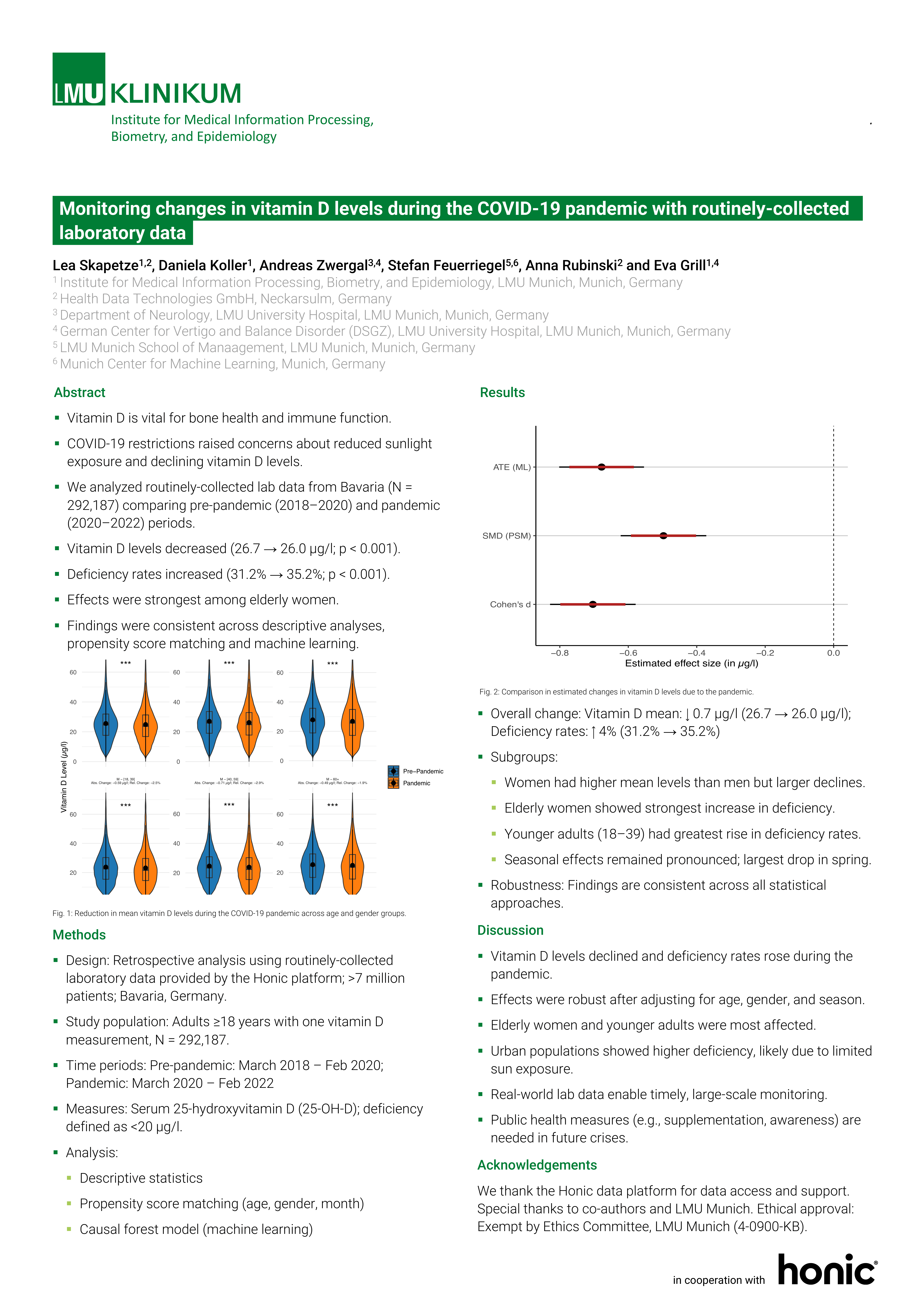
Monitoring changes in vitamin D levels during the COVID-19 pandemic with routinely-collected laboratory data
Lockdowns left a measurable mark on 292,187 people in Bavaria.
Using routinely collected laboratory data from a Bavarian network covering more than 7 million patients, this study examined whether pandemic restrictions affected vitamin D status. Among 292,187 adults, mean 25-OH-D levels fell from 26.7 to 26.0 µg/l and deficiency rates rose from 31.2% to 35.2% between the pre-pandemic and pandemic periods, with elderly women and younger adults most affected. Results held across descriptive statistics, propensity score matching and a causal forest model — showing that real-world lab data can support timely, large-scale public health monitoring.

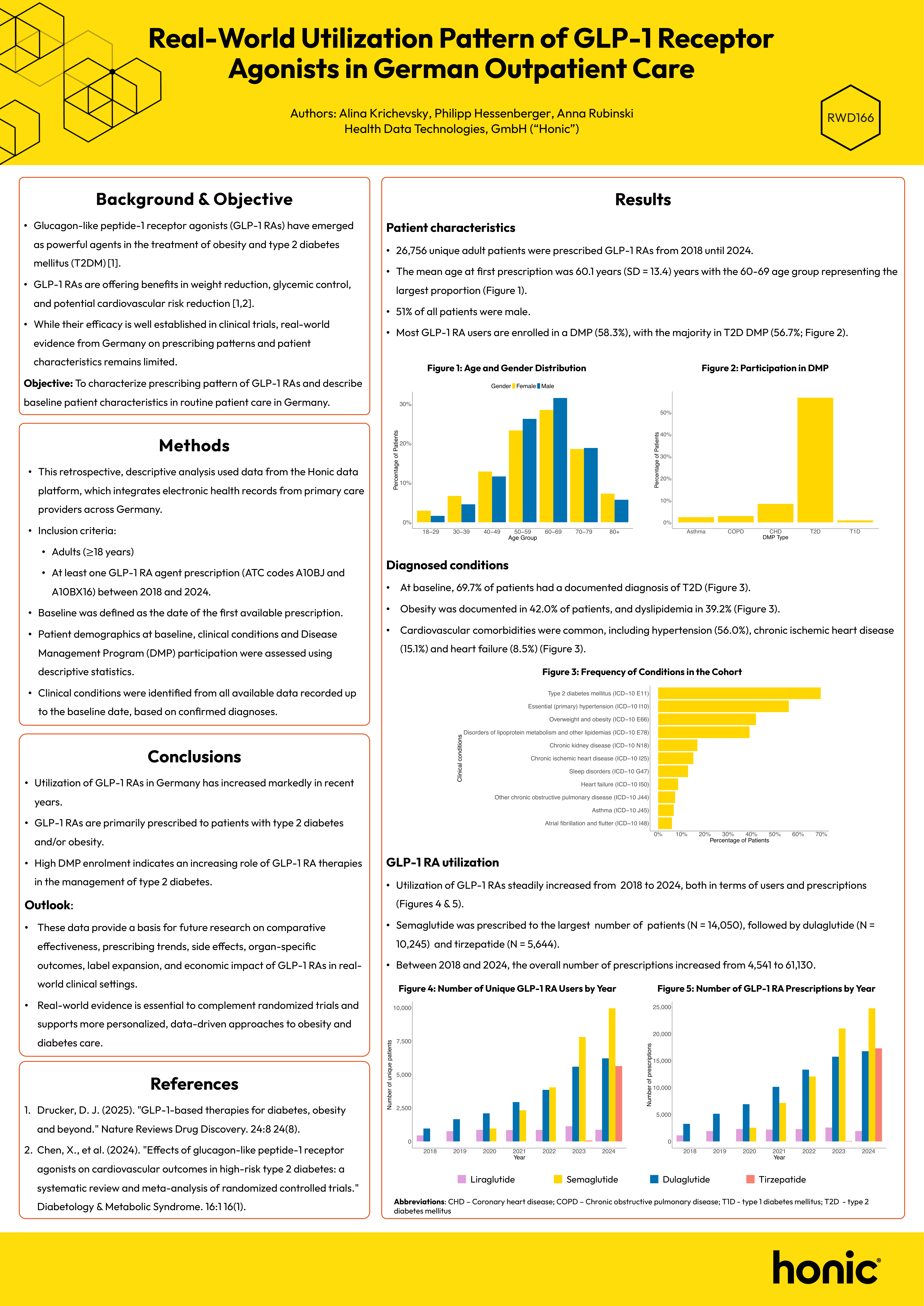
Real-World Utilization Pattern of GLP-1 Receptor Agonists in German Outpatient Care
From 4,541 to 61,130 prescriptions: what GLP-1 uptake in Germany actually looks like.
This retrospective analysis characterised how GLP-1 receptor agonists are prescribed in German routine care, using electronic health records from primary care providers on the Honic platform. Across 26,756 adult patients treated between 2018 and 2024, prescriptions rose from 4,541 to 61,130, with semaglutide the most frequently prescribed agent. Patients had a mean age of 60.1 years at first prescription, 69.7% had documented type 2 diabetes and 42.0% obesity, and 58.3% were enrolled in a disease management programme - a baseline for future work on comparative effectiveness, prescribing trends and outcomes.

Enriching Outcome Information in RWD through Secure Record Linkage: a Registry-Mortality Example
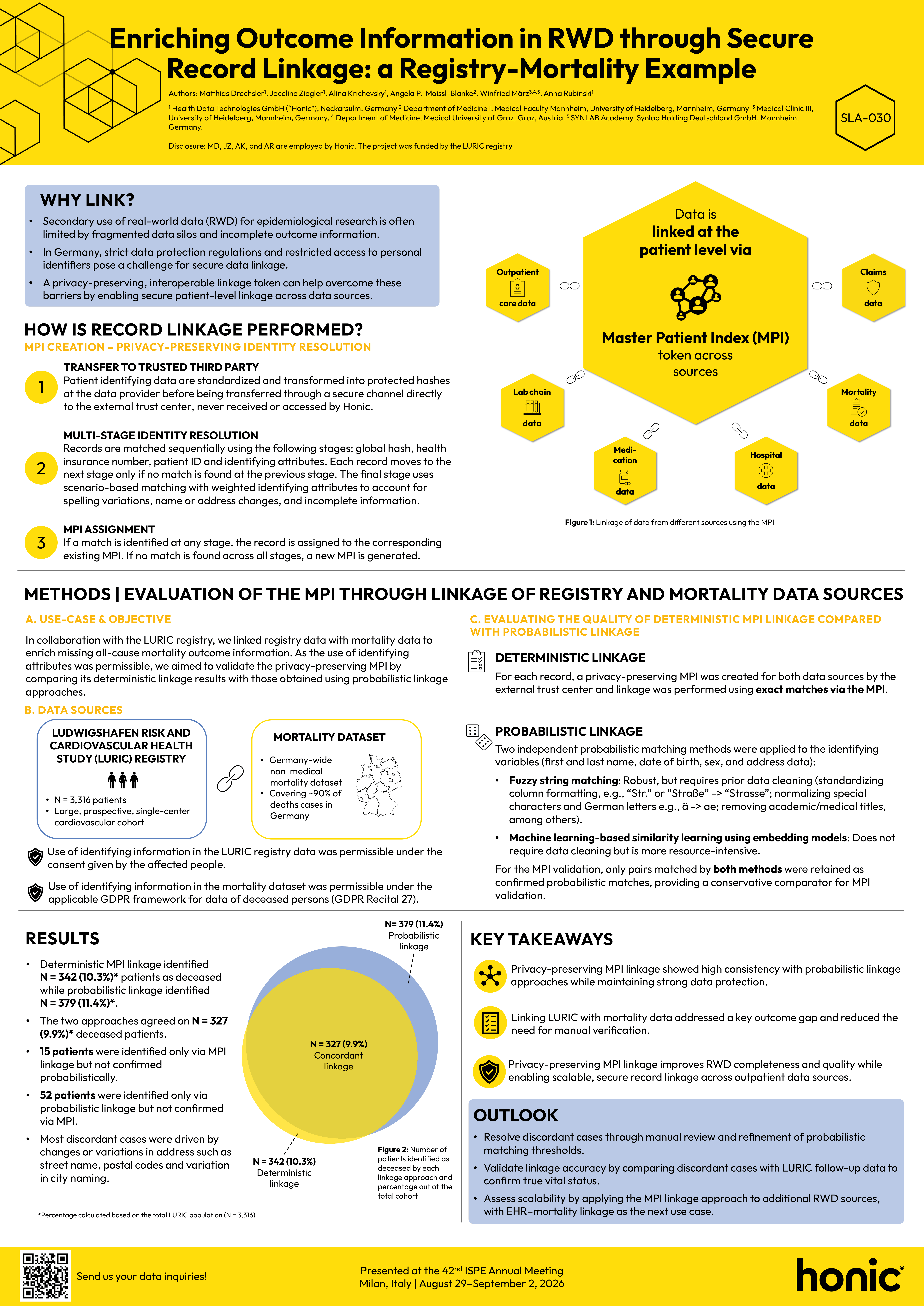
How can we close outcome gaps in RWD without ever touching personal identifiers?
Fragmented data sources and strict German privacy rules limit outcome completeness in real-world research. In collaboration with the LURIC cardiovascular cohort (N = 3,316), this project linked registry data to a Germany-wide mortality dataset using Honic's privacy-preserving Master Patient Index, and validated the result against two probabilistic matching methods. Deterministic MPI linkage identified 342 deceased patients (10.3%) versus 379 (11.4%) probabilistically, with 327 concordant cases; most discrepancies traced back to address variations. The work demonstrates that privacy-preserving linkage can close outcome gaps without compromising data protection.

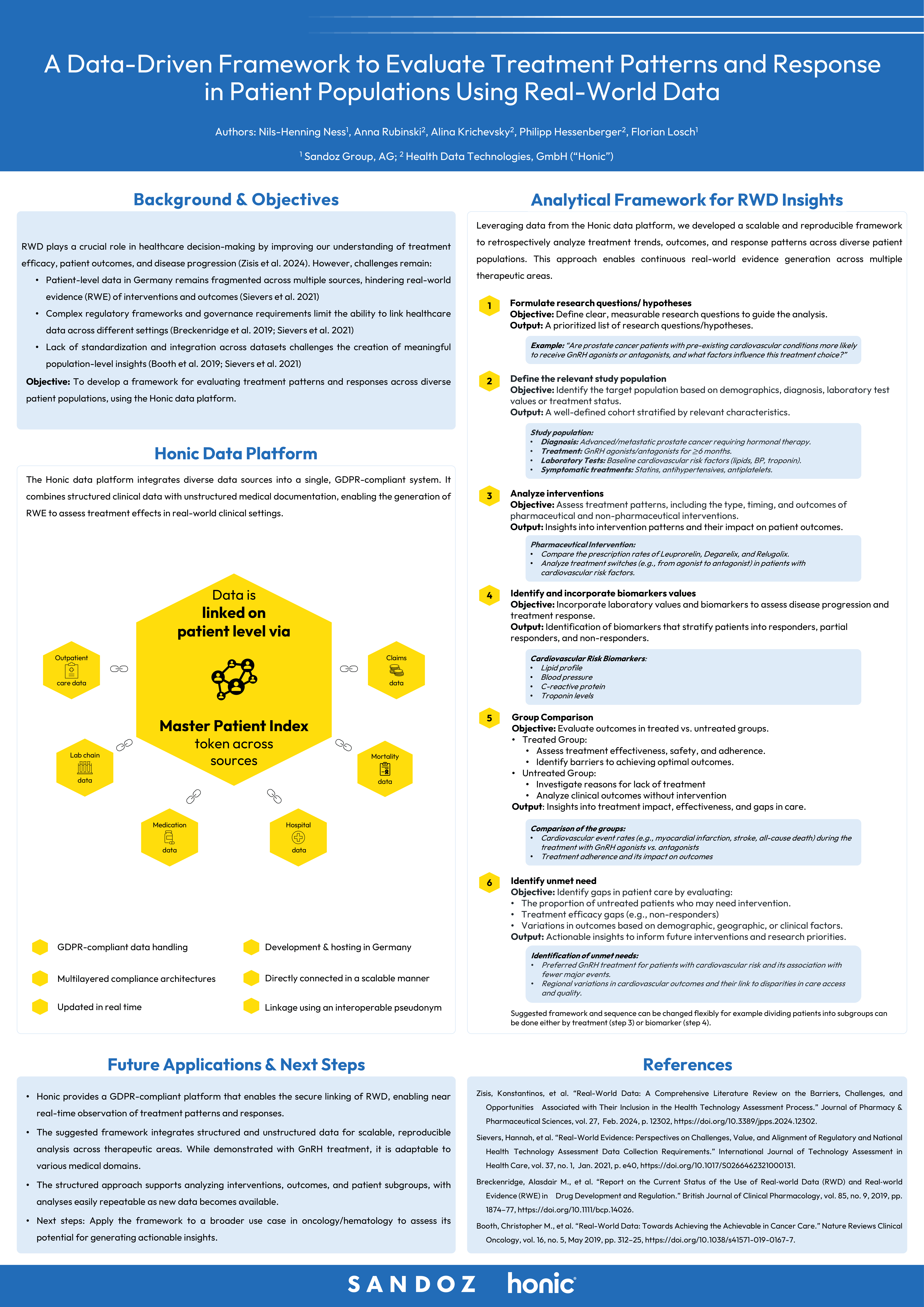
A Data-Driven Framework to Evaluate Treatment Patterns and Response in Patient Populations Using Real-World Data
A reusable blueprint for turning fragmented RWD into treatment insights.
This collaboration set out a structured, reproducible framework for analysing treatment patterns and response in real-world populations on the Honic platform. Six steps lead from research question and cohort definition through intervention analysis, biomarker integration and treated-versus-untreated comparison to the identification of unmet need. Demonstrated on GnRH therapy in advanced prostate cancer, the framework is designed to be flexible across therapeutic areas and repeatable as new data becomes available, with oncology/haematology as the next use case.

Interested in real-world health data research?
Honic supports partners across pharma, academia, and public health in designing and implementing real-world monitoring solutions for cardiovascular risk management.
If you are interested in collaborative research using real-world data, our team is happy to support feasibility assessments, study design, and analytics execution.
Don’t hesitate to contact us to schedule a consultation!

Philipp Hessenberger
VP Growth

Anna Rubinsiki
Lead Data Scientist